
Home / Blog / Home solar
Why is my solar producing less? Common causes and fixes
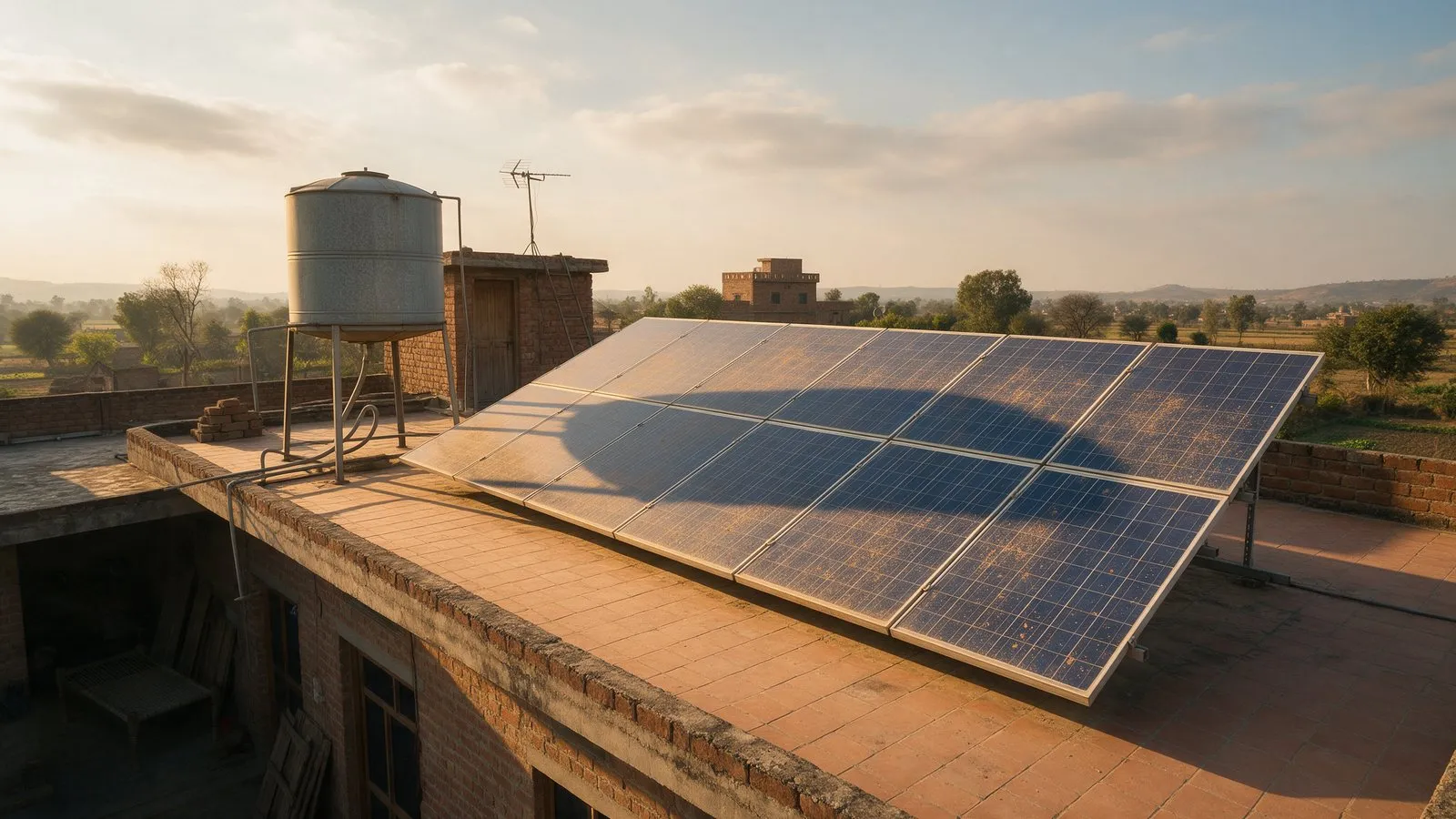 Representative image
Most calls about “low” solar output turn out to be one of three things: the season, dirty panels or a shadow that was not there before. A smaller number are real faults that need a technician. This guide shows what normal output looks like month by month in Tricity, then works through the common causes in the order worth checking.
First, check against a normal month
Solar output in Tricity changes a lot with the seasons. By our estimate, each kW of shade-free panels makes about 91 units in January and 147 in May, and about 1,440 over a year. Our guide to how much solar produces in each month has the full month-by-month table.
So a 5 kW system that makes 450 units in January and 750 in May is working normally. Winter fog and smog can push December and January below their usual range in a bad year. June is lower than May despite the long days, because of heat, haze and the first monsoon clouds.
Compare like with like: this January with last January, or a clear day with a clear day. A cloudy week is not a fault.
The common causes, in the order to check them
1. Dirt
Dust, smog and bird droppings on the panels cut output. By the estimate of the study in the questions below, dust settled on panels in north India costs roughly a tenth of a year’s output. If a clear day after cleaning produces noticeably more than a clear day before it, dirt was the cause. Our guide to cleaning solar panels covers how to do it safely.
2. New shade
A tree that has grown, a new water tank, a neighbour’s new floor or a dish antenna can shade part of the array, often only in the morning or late afternoon, and only in winter when shadows are long. Shade on even one panel can pull down the output of every panel wired with it. Walk onto the roof at different times of day and look.
3. The inverter switching off when grid voltage is high
On-grid inverters must disconnect if the grid voltage goes outside set limits, and in some areas the voltage runs high in the middle of the day. The inverter then switches off and on repeatedly, losing output at exactly the sunniest hours. The app or the inverter’s display usually shows a grid voltage error. This needs your installer, who can check the settings within the permitted limits, and if the voltage is persistently high, a complaint to the electricity board.
4. A tripped breaker or blown fuse
A tripped breaker in the AC box, or a blown fuse or isolator in the DC box, cuts out the whole system or one string of panels. If the inverter shows zero output on a sunny day, or one string reads far below the other, call your installer. Do not reset DC isolators or open the boxes yourself.
5. A faulty panel, cable or connector
A cracked panel, a burnt connector or a damaged cable usually shows up as one string producing less than the others. Monkeys and rodents chewing cables are a real cause in parts of Tricity. A technician can test each string and find the fault.
6. Heat
Every panel and inverter loses some output when hot, and an inverter in direct afternoon sun or a closed cupboard reduces its output further to protect itself. If output is lowest on the hottest afternoons, check where the inverter is mounted and whether its vents are clear.
7. The monitoring app has stopped updating
If the app shows nothing for days, the data logger may simply have lost its Wi-Fi connection after a router change or a password change. The system may be working perfectly. Check the inverter’s own display, and reconnect the logger.
8. The expectation was too high
If a system has never reached the figure promised in the quotation, the promise may have been the problem. A shade-free system in Tricity makes about 110 to 125 units per kW a month averaged over the year. Claims well above that are not realistic.
Reading the bill, not just the app
The app shows what the panels make. The PSPCL bill shows only what you import and export, after the house has used its share. A month of high AC use can make the bill look as if solar is doing less, when the panels are producing normally. Our guide to net metering in Punjab explains how to read the export and import readings.
When to call a technician
- Zero output on a sunny day
- An error message on the inverter or in the app that does not clear
- One string producing much less than the others
- A burning smell, scorch marks, or a crackling sound near the inverter or the boxes
- Output more than about 15% below normal for the month after cleaning
How we keep an eye on it
Under the 4-Year Care Shield included with every home system from us, we review your generation from the inverter app each month and call you if a month comes in more than 15% below what we expected. Our guide to maintenance through the year covers the routine checks.
Common questions
How many units should a 5 kW solar system produce in a day?
In Tricity, about 18 to 21 units a day averaged over the year: around 22 to 25 on clear days in April and May, and 13 to 16 in December and January. Cloudy, foggy or smoggy days produce less.
Why does my solar produce less in winter?
The sun is lower and the days are shorter, and fog and smog cut the light reaching the panels. In Tricity, December and January typically produce about two thirds of what April and May do. This is normal, and a system sized from a full year of bills allows for it.
Why does my solar inverter keep switching off?
The most common reason is grid voltage going above the inverter's permitted limit, usually around midday. The app or display normally shows a grid voltage error. Ask your installer to check the settings, and raise persistent high voltage with your electricity board.
Does dust really reduce solar output?
Yes. A 2017 study led by Duke University, with panels tested at IIT Gandhinagar, estimated that dust and air pollution cut solar output in north India by 17% to 25%. About half of that comes from dust and particles settled on the panels, which regular rinsing with plain water removes. The rest comes from haze in the air, which no cleaning can fix.
Our home systems
Each one is sized to your own bills. See the price per kW and what each kW makes.
Core
Small home
Usually 1 to 3 kW
Ask about CoreComfort
Family home
Usually 4 to 5 kW
Ask about ComfortGrand
Kothi or large home
Usually 6 kW and above
Ask about Grand