
Home / Blog / Subsidy and net metering
Net metering in Punjab: how PSPCL bills export and import units
 Representative image
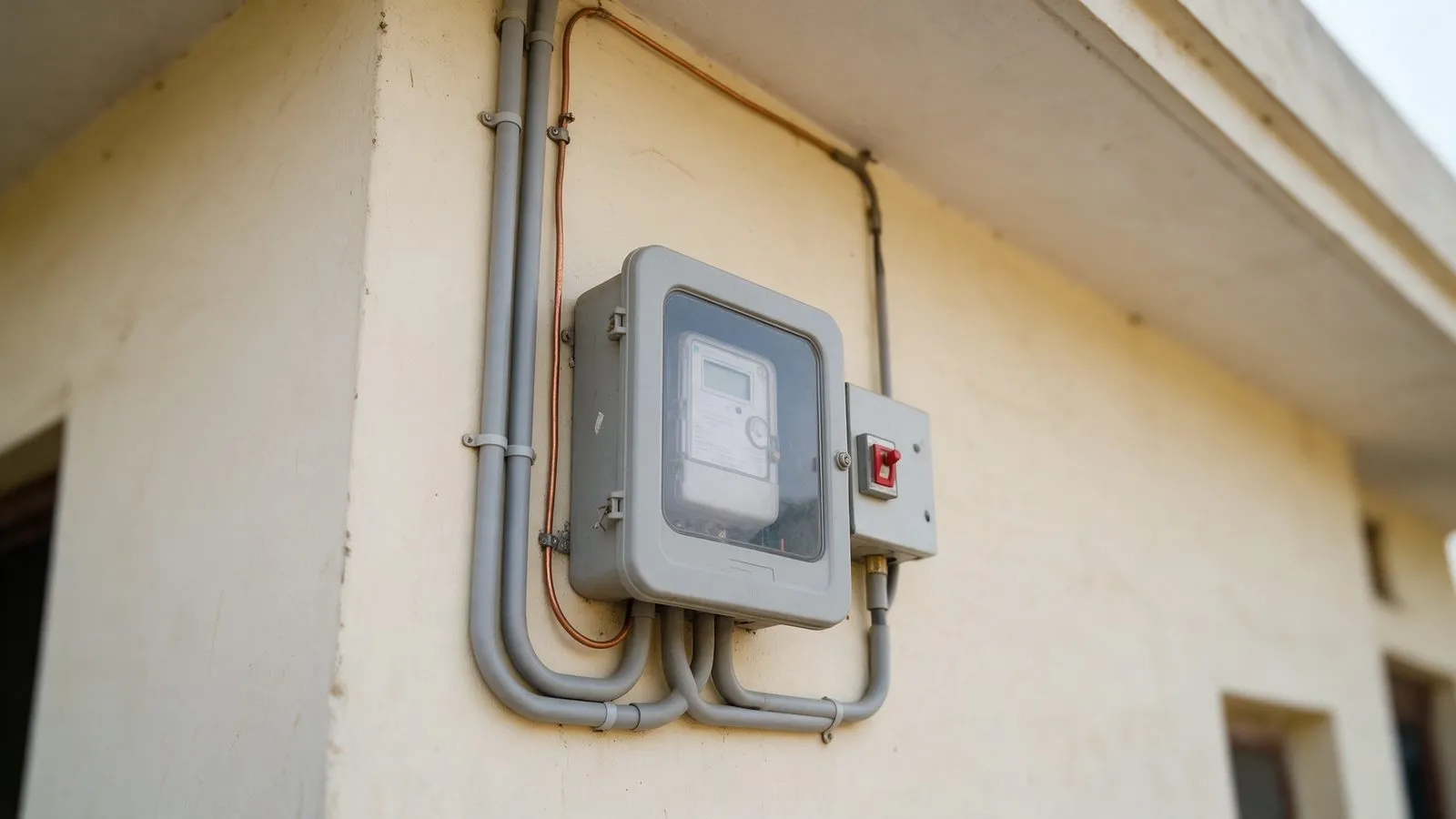
When you install rooftop solar in Punjab, PSPCL replaces your meter with a net meter. From then on your bill shows two numbers instead of one: the units you imported from the grid and the units you exported to it. This guide explains how PSPCL turns those two numbers into a bill, what happens to surplus units, and what changed in the rules in 2026.
Who sets the rules
Net metering in Punjab is governed by the Punjab State Electricity Regulatory Commission’s rooftop solar regulations of 2021. PSERC notified its third amendment to them in April 2026. PSPCL applies the rules through its net-metering agreement and your bill. If anything here differs from your own agreement, the agreement and the current regulations prevail.
The two-way meter
A net meter records energy in both directions:
Everything your panels make and your home uses at the same moment never reaches the meter at all. That is the first and largest saving.
By day: the panels power your home first, and extra units flow to the grid through the net meter.
At night: you draw units back from the grid. The electricity board bills only the difference.
How the bill is worked out
Each billing cycle, PSPCL sets your exported units against your imported units:
A worked example. In a two-month cycle a home imports 700 units and exports 450. Its net use is 250 units. For a general-category domestic connection that is well within Punjab’s 600 free units per two-month bill, so the energy charges are zero. Without solar, the same home would have used far more than 700 units from the grid and paid for every one. How the free units interact with solar is covered in our guide to whether solar is worth it with Punjab’s 300 free units.
If net use stays within Punjab’s free units, PSPCL also waives the fixed charges, meter rent and duty, so the bill is zero. If it goes over, those charges are billed too.
Surplus units and the settlement year
Surplus units are carried forward from one bill to the next within a settlement period, which in Punjab runs from October to September. Units banked in the bright months of spring and early summer can then offset bills later in the year.
Credit left over at the end of the settlement period is paid within 30 days, at 75% of the feed-in tariff PSERC sets for that year. The feed-in tariff for 2026-27 is ₹2.97 a unit, so leftover credit earns about ₹2.23 a unit, against the ₹4.25 to ₹7.05 a home pays for one. So a system much larger than your needs does not pay back well. The aim is to match your annual use, not to sell power to PSPCL.
How large a system PSPCL allows
A system cannot be larger than your sanctioned load, which is printed on your bill, or the contract demand on a larger connection, and net metering is capped at 500 kW. Since PSERC’s amendment of April 2026, the same limit applies to shops, offices and other connections as to homes; the earlier limit of 70% for non-domestic connections has gone. If the system your bills justify is bigger, the load has to be increased. For systems of up to 10 kW, PSERC’s regulations, amended in February 2025, treat a complete application as accepted, and PSPCL carries out any load increase it needs, with you paying the load-extension charges. Above that, apply for the increase first. For homes, PSERC has also waived the processing and meter-testing fees for systems of up to 10 kW, until Punjab reaches 2.5 lakh rooftop installations under PM Surya Ghar.
New in 2026: solar for flats and multiple connections
The April 2026 amendment added two arrangements that took effect from 1 July 2026:
For flat owners in Mohali’s and Zirakpur’s societies, who cannot use a shared roof alone, virtual net metering opens a route to solar that did not exist before. It is new, and billing systems are still settling, so expect the first projects to take longer.
The process, in brief
- Apply for rooftop solar, either on the PM Surya Ghar portal for a home claiming the subsidy, or through PSPCL directly.
- PSPCL checks feasibility against your connection and sanctioned load.
- The system is installed.
- PSPCL inspects the installation, fits the net meter and signs the net-metering agreement with you.
- Billing on the net meter starts from the next cycle.
The inspection and the net meter are usually the slowest steps, because they depend on PSPCL’s schedule. For homes claiming the subsidy, our step-by-step PM Surya Ghar guide covers the portal side.
Reading your first net-metered bill
Look for these figures:
- Import reading and export reading for the cycle
- Net units billed, or the credit carried forward
- Cumulative credit in the current settlement period
- Fixed charges and duty, which are billed once net use goes over Punjab’s free units
If the export reading is zero after a sunny cycle, contact PSPCL and your installer. It can mean the meter or the inverter settings need checking.
Common questions
Does PSPCL pay me for the units I export?
Not each month. Exported units first offset the units you import, and any surplus is carried forward within the October to September settlement period. Credit left at the end of the period is paid within 30 days, at 75% of PSERC's feed-in tariff. That is about ₹2.23 a unit in 2026-27, well below the retail tariff.
Do my 300 free units still apply with net metering?
Yes. The free units belong to your domestic connection. The free-unit limit is applied to your net use after solar, so a correctly sized system helps you stay within it.
Can I get net metering in a flat?
Not on your own share of a common roof without the society's approval. Since 1 July 2026, PSERC's virtual net metering allows residents of a building to set up one shared plant and divide the credits, which is the most practical route for most flats.
Is net metering different in Chandigarh and Panchkula?
Yes. Chandigarh (CPDL) and Panchkula (UHBVN) follow their own regulators' rules, which differ in settlement and payment terms. This guide covers PSPCL in Punjab only. Our guides to rooftop solar in Chandigarh and Panchkula cover the other two.
Our home systems
Each one is sized to your own bills. See the price per kW and what each kW makes.
Core
Small home
Usually 1 to 3 kW
Ask about CoreComfort
Family home
Usually 4 to 5 kW
Ask about ComfortGrand
Kothi or large home
Usually 6 kW and above
Ask about Grand