
Home / Blog / Home solar
Solar on a rented house or a floor you do not own
 Representative image
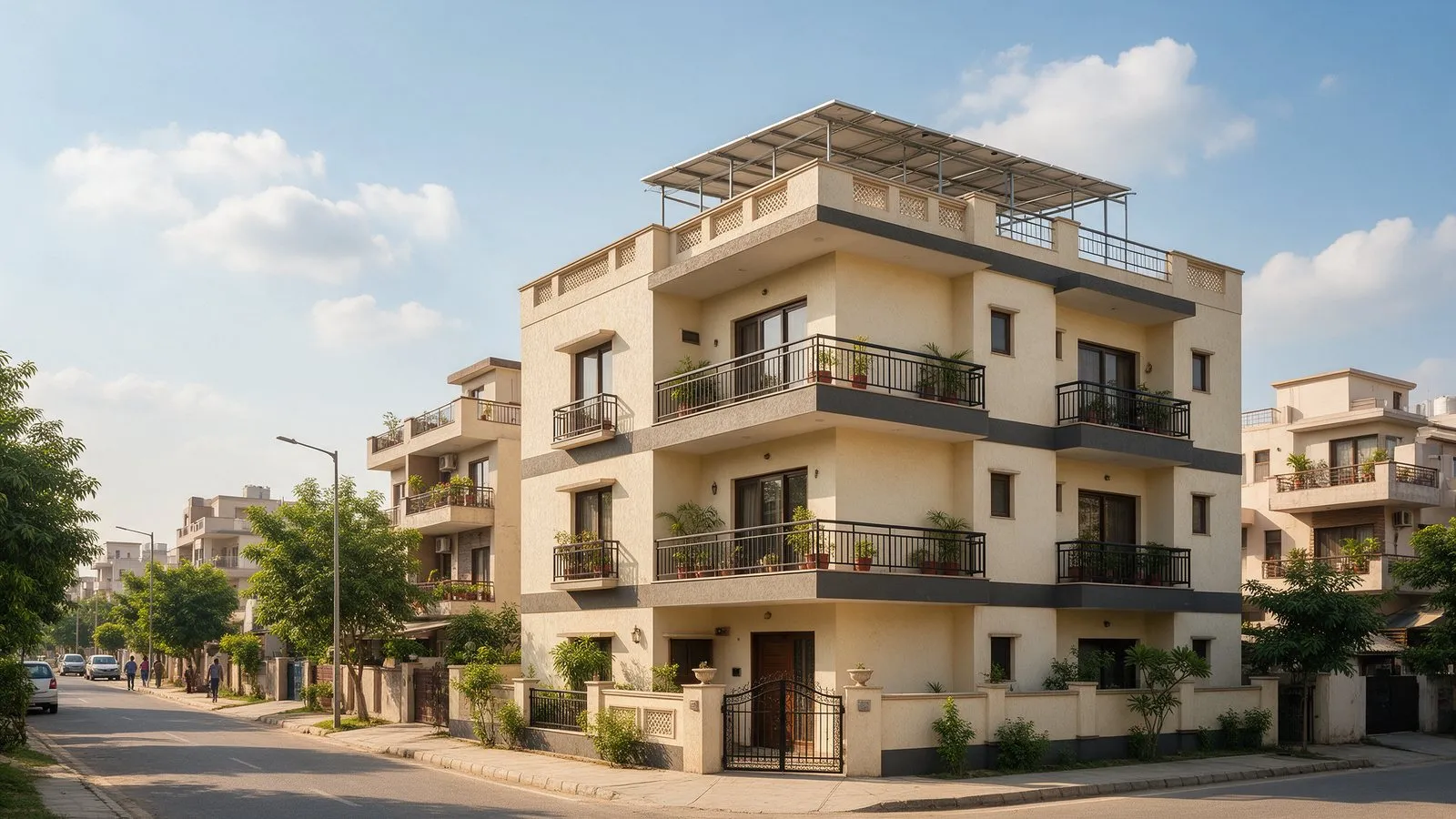
Rooftop solar is simplest when one family owns the house, the roof and the electricity connection. Many homes in Mohali, Zirakpur and Kharar are not like that. Some families rent. Many live on one floor of a builder floor, with other owners above and below and a roof that belongs to one of them, or to all of them. This guide sets out what each can do, and what the rules allow.
Three things decide what you can do
- Who owns the house, because the PM Surya Ghar subsidy depends on it.
- Who has the right to use the roof, because the panels go there.
- Whose name the electricity connection is in, because net metering and the subsidy both run through it.
If you rent the house
The subsidy. PM Surya Ghar is for a household that owns a house with a roof suitable for solar, has a valid electricity connection and has not already had a subsidy for solar panels. A tenant does not meet the first condition, so a tenant cannot claim the subsidy.
Installing without the subsidy. A tenant can hold an electricity connection: PSERC’s Supply Code accepts a rent deed or lease deed as proof of occupancy. So a tenant with the connection in their own name can, in principle, apply for net metering on that connection. In practice, the roof is the landlord’s, so nothing should go up without the landlord’s written consent. A written agreement should also cover:
- Who pays, and who owns the system
- Who looks after it, and who claims under the warranties
- What happens at the end of the tenancy: removal, sale to the landlord or a new tenant, or the cost of shifting it
Banks look for the same thing. SBI’s PM Surya Ghar loan, for example, requires the applicant to have rights to the roof where the system is installed.
The usual answer. For most rented homes, the landlord installing the system is the cleaner route. The landlord owns the roof and the house, can claim the subsidy, and the system stays with the property. How the saving is shared is then a matter between landlord and tenant.
One more point. If you leave a net-metered connection, PSERC’s regulations do not pay for surplus units still credited to it. Plan the end of a tenancy before the end of a settlement year where you can.
If you own a floor in a builder floor
Each floor usually has its own electricity connection in its owner’s name, and its own sanctioned load. The question is the roof.
A raised frame helps on a shared roof: it leaves the space underneath free for water tanks, washing lines and maintenance, which makes agreement easier.
The shared-plant option: virtual net metering
Since 1 July 2026, PSERC’s virtual net metering lets several domestic consumers in Punjab set up one rooftop plant together, anywhere within PSPCL’s area, and divide its units between their own bills in an agreed share. The plant must be at least 5 kW, and no larger than the members’ sanctioned loads added together, up to 500 kW.
For a builder floor, that can mean one plant on the roof shared by all the floors, each receiving its share of the units on its own bill. Our guide to solar for housing societies explains how the arrangement works, including what happens when a member sells.
A checklist before you commit
- The connection is in the name of the person who will apply. If it is in a previous owner’s or a parent’s name, transfer it first.
- The roof rights are clear from the sale deed, or agreed in writing by everyone who shares them.
- The sanctioned load covers the system you want. If not, our guide to increasing your sanctioned load explains the steps.
- For the subsidy, the applicant owns the house and the bank account is in the same name as the connection. The step-by-step subsidy guide covers the rest.
How we help
At the survey we read the connection details from the bill and ask to see what the sale deed says about the roof. Where the roof is shared, we can lay out a design that divides it fairly between floors, so each owner can see their share before anyone signs. Our home solar page covers system sizes and prices.
Common questions
Can a tenant get the PM Surya Ghar subsidy?
No. The scheme is for a household that owns a house with a roof suitable for solar panels. A landlord who owns the house can claim it, subject to the other conditions, and the system then stays with the property.
Can I install solar on a rented house without the subsidy?
Only with the landlord's written consent, because the roof is theirs. A tenant with the electricity connection in their own name can apply for net metering on it, but agree in writing who owns the system and what happens when the tenancy ends.
Who owns the roof in a builder floor?
It depends on the sale deeds. Often the top-floor owner has the roof; sometimes it is shared by all the floors. Check your own deed. Where the roof is shared, every owner who shares it should agree in writing before any panels go up.
Can floors in one building share a solar plant?
Yes, in Punjab since 1 July 2026. Under PSERC's virtual net metering, domestic consumers can set up one plant of at least 5 kW together and divide its units between their own bills in an agreed share.
Our home systems
Each one is sized to your own bills. See the price per kW and what each kW makes.
Core
Small home
Usually 1 to 3 kW
Ask about CoreComfort
Family home
Usually 4 to 5 kW
Ask about ComfortGrand
Kothi or large home
Usually 6 kW and above
Ask about Grand