
Home / Blog / Subsidy and net metering
How to increase your sanctioned load with PSPCL before going solar
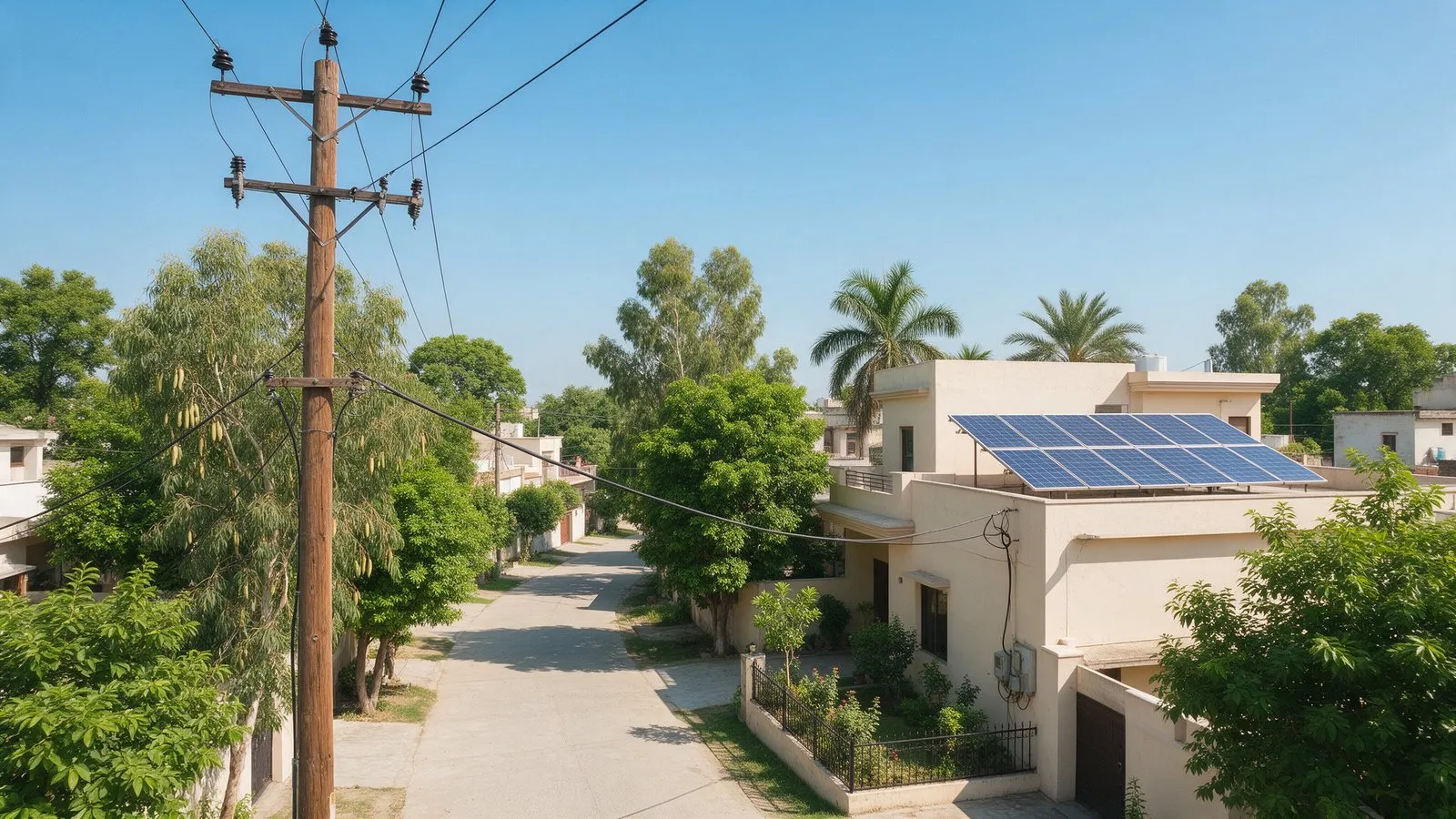 Representative image
The figure that most often decides the size of a rooftop system is not the roof or the budget. It is the sanctioned load printed on your electricity bill. In Punjab a solar system cannot be larger than it, so a home that needs 6 kW of solar on a 4 kW connection has to raise the load first, or have PSPCL raise it as part of the solar application. This guide explains when each applies, what the increase involves and what it does to your bill.
Why the sanctioned load matters
Under PSERC’s rooftop solar regulations, as amended in April 2026, a net-metered system can be as large as your sanctioned load, or the contract demand on a larger connection, up to 500 kW. Since that amendment the same limit applies to shops, offices and other connections as to homes.
So the first check on any proposal is simple: compare the system size with the load on your bill. If the system your bills justify is larger, the load has to go up.
Systems up to 10 kW: PSPCL raises the load with the solar application
For systems of up to 10 kW, PSERC’s regulations, amended in February 2025, say two things:
- A complete solar application is treated as accepted, without a separate feasibility study.
- If the system needs a higher sanctioned load, PSPCL carries out the increase, and you pay the load-extension charges under the Supply Code.
So for most homes there is no separate application to make first. The increase follows the solar application, and the charges are added to what you pay PSPCL.
Systems above 10 kW: apply for the increase first
Above 10 kW, PSPCL has 15 days to complete a technical feasibility study of the solar application, and a load increase is applied for separately. Under PSERC’s Supply Code 2024, you apply on PSPCL’s A&A (Application and Agreement) form, either online through PSPCL’s portal or app, or at your subdivision office.
Documents. For an online application with Aadhaar verification, no signature or separate identity proof is needed, and you upload proof of ownership or occupancy of the premises. Otherwise, identity proof such as an Aadhaar card, voter ID, passport, driving licence or PAN card goes with the form. Proof of ownership or occupancy can be a sale deed, lease or rent deed, a registered power of attorney, a municipal tax receipt, an allotment and possession letter, or a recent water, sewerage or gas bill. The application also needs a test report of the wiring.
Charges. For a total load of up to 150 kW, the application is made with a processing fee, security (consumption) for the extra load only, security for the meter and the service connection charges approved by PSERC. PSPCL’s office or website gives the current amounts for your load.
Time limits. Where no new line or transformer work is needed, the Supply Code gives PSPCL 7 days to release the extra load in towns such as Mohali, Zirakpur and Kharar, and 15 days in rural areas, from a complete application. Where the low-tension line has to be extended or strengthened, the limit is 30 days.
Above 7 kW, a home needs three-phase supply
Under the Supply Code, a domestic load of up to 7 kW can be supplied on single phase. Above 7 kW, the supply is three-phase. So a home on a single-phase connection that moves from, say, 6 kW to 9 kW also changes to a three-phase connection, which can mean new service cable and a new meter. A proper survey checks this before a price is given.
What a higher load does to your bill
PSPCL’s 2026-27 domestic tariff depends on the sanctioned load:
| Sanctioned load | Rate for the first 300 units | Above 300 units | Fixed charge |
|---|---|---|---|
| Up to 2 kW | ₹3.85 | ₹7.05 | ₹50 a kW |
| Above 2 kW, up to 7 kW | ₹4.25 | ₹7.05 | ₹70 a kW |
| Above 7 kW, up to 20 kW | ₹5.00 | ₹7.05 | ₹100 a kW |
Two things follow.
This is one more reason to size the system to keep your net use within the free units, which our guide to what size solar system your home needs explains. Raise the load only as far as the system needs.
Chandigarh and Panchkula
How we handle it
At the survey we read the sanctioned load and category from your bill, check whether the connection is single or three phase, and size the system around both. Where the load must go up, the proposal says so, with the charges listed separately from the price of the system. Our list of documents for PSPCL net metering covers the rest of the paperwork, and the step-by-step subsidy guide covers the portal.
Common questions
Can my solar system be bigger than my sanctioned load?
No. In Punjab a net-metered system can be as large as your sanctioned load or contract demand, up to 500 kW, and no larger. Since PSERC's amendment of April 2026, the same limit applies to shops and offices as to homes.
Do I need to apply for a load increase before the solar application?
Not for a system of up to 10 kW. PSERC's regulations treat a complete application as accepted and have PSPCL carry out any load increase it needs, with you paying the load-extension charges. Above 10 kW, apply for the increase on PSPCL's A&A form first.
Will a higher sanctioned load increase my electricity bill?
Not in months when solar keeps your net use within Punjab's 300 free units, because PSPCL then waives the energy and fixed charges. In months above the limit, a higher load band can mean a higher first-slab rate and fixed charge, so raise the load only as far as the system needs.
How long does PSPCL take to increase the load?
Under the Supply Code, 7 days in towns such as Mohali, Zirakpur and Kharar and 15 days in rural areas from a complete application, where no line work is needed. If the low-tension line has to be extended or strengthened, the limit is 30 days.
Our home systems
Each one is sized to your own bills. See the price per kW and what each kW makes.
Core
Small home
Usually 1 to 3 kW
Ask about CoreComfort
Family home
Usually 4 to 5 kW
Ask about ComfortGrand
Kothi or large home
Usually 6 kW and above
Ask about Grand