
Home / Blog / Home solar
What size solar system does my home need? Work it out from your bill
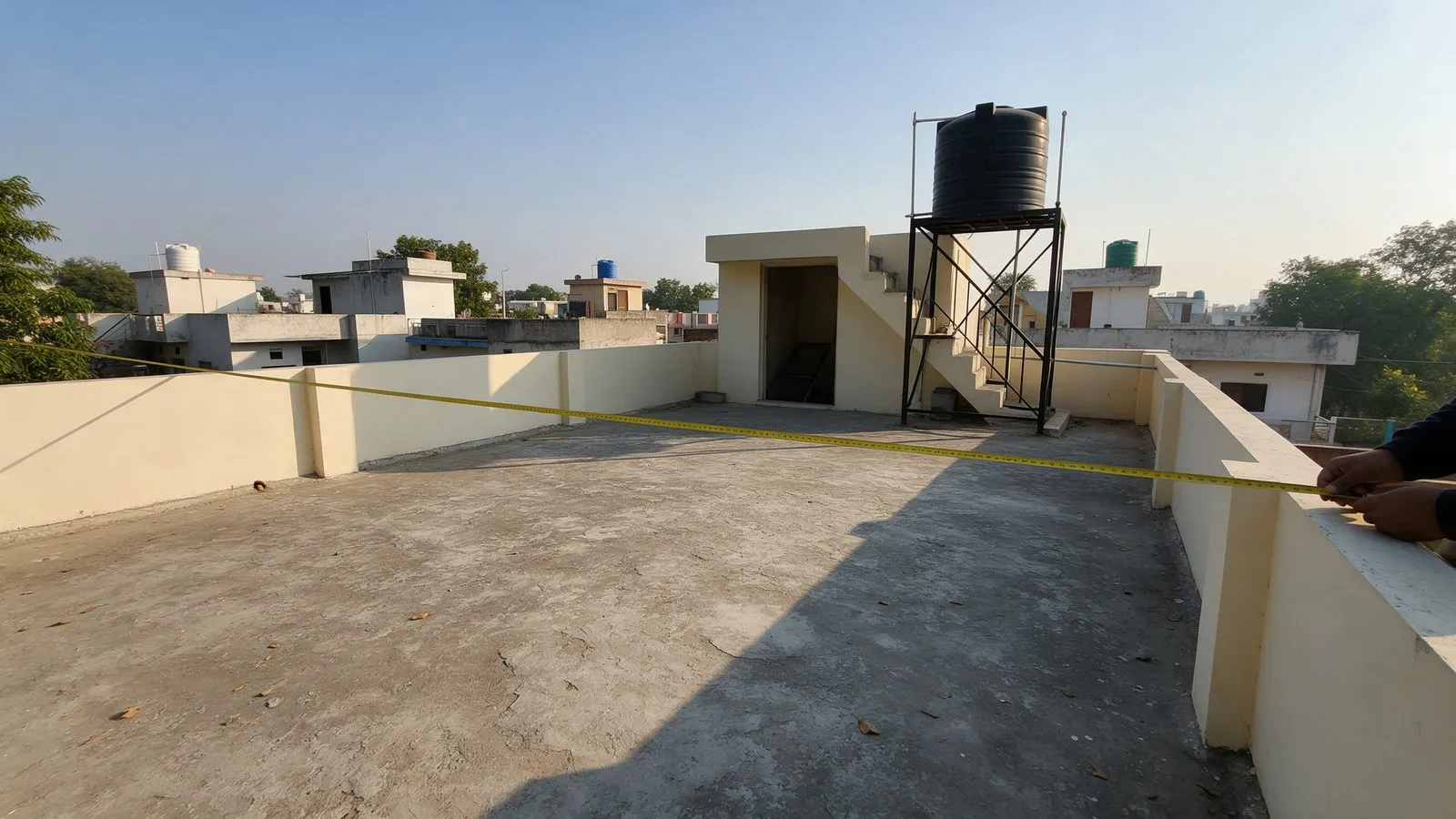 Representative image
The right size for a rooftop solar system comes from your electricity bills, not from the size of your roof or a round number. Too small and your bill stays high. Too large and you pay for panels whose surplus earns very little. This guide shows how to work it out in a few steps, the same way we do in a proposal.
Step 1: Find your monthly use
Look for “units consumed” on your bill. PSPCL and UHBVN bill every two months, so halve the figure to get monthly use. If you are in Chandigarh, check whether your bill covers one month or two.
Collect a full year of bills if you can, from the PSPCL website or app. You need two numbers:
Never size from a winter bill alone. It will leave you short in summer.
Step 2: Convert units into kW
In Tricity, a shade-free system makes about 3.6 to 4.2 units per kW each day across the year, or roughly 120 units per kW each month. Summer months produce more, winter months less.
System size (kW) ≈ monthly units ÷ 120
| Average monthly use | Suggested size |
|---|---|
| 250 units | 2 kW |
| 360 units | 3 kW |
| 480 units | 4 kW |
| 600 units | 5 kW |
| 840 units | 7 kW |
| 1,200 units | 10 kW |
This is the size that covers your whole annual use. In Punjab there is often a better answer, explained in step 3.
Step 3: Allow for Punjab’s 300 free units
Domestic PSPCL connections get 300 free units a month, 600 on each two-month bill. For a general-category home, crossing that limit makes the whole bill payable. With net metering, the limit is applied to your net use after solar.
So for many Punjab homes, the goal is not to cover all your use. It is to keep your net use under 300 units a month in every billing cycle, including summer. That needs a smaller system:
System size (kW) ≈ (peak summer monthly use − 300) ÷ 108
We use about 108 units per kW, a cautious figure that still holds in a hazy summer month. Round up to the next whole kW. For example, a home using 800 units a month in June needs (800 − 300) ÷ 108 ≈ 4.6, so 5 kW.
Commercial connections, and homes outside Punjab, which get no free units, should use step 2 instead. Our guide to whether solar is worth it with the 300 free units explains the rule in detail.
Step 4: Check the roof
A system needs about 80 to 100 sq ft of shade-free roof per kW, so a 4 kW system needs around 330 to 400 sq ft. Shadows from water tanks, stair rooms, trees and taller buildings next door all reduce the usable area. A raised structure lifts the panels clear of the tank’s shadow and keeps the roof usable underneath.
If the roof is smaller than the size your bill suggests, a smaller system still pays back. It simply covers less of your use.
Step 5: Check your sanctioned load
Your sanctioned load is printed on the bill, and a home system cannot be larger than it. If the size from steps 2 or 3 is larger, the load has to be increased. For systems of up to 10 kW, PSERC’s regulations, amended in February 2025, say PSPCL should carry out the increase as part of the solar application. Above 10 kW, apply for the increase first. Either way, check this early and ask what the load-extension charges are.
Step 6: Plan for the next few years
A system lasts 25 years, so think about how your use will change:
If a change is likely within a year or two, size for it now, or choose an inverter with room to add panels later.
Three worked examples
A general-category home in Mohali. It uses 250 units a month in winter and 800 in summer, with a sanctioned load of 5 kW. Its winter bills are already zero, so the target is summer: (800 − 300) ÷ 108 ≈ 4.6, so 5 kW. That keeps net use under 300 units through the summer, and needs about 400 to 500 sq ft of roof.
A kothi using up to 900 units a month in summer. (900 − 300) ÷ 108 ≈ 5.6, so 6 kW. It needs a sanctioned load of at least 6 kW and around 480 to 600 sq ft of shade-free roof.
A home in Chandigarh using 500 units a month. Chandigarh homes do not get Punjab’s free units, so every unit counts: 500 ÷ 120 ≈ 4 kW.
Mistakes that cost money
Let us check it for you
Our savings calculator works out the size, saving and payback from your units, using 2026-27 rates for PSPCL, CPDL and UHBVN. Or send a photograph of your summer bill on WhatsApp and we will size the system from your actual use. For what the result will cost, see the price of a 5 kW system in Mohali.
Common questions
How many units does a 1 kW solar system make in a month?
About 110 to 125 units a month in Tricity on a shade-free roof, averaged across the year, with more in summer and less in winter.
Is a bigger solar system always better?
No. A system larger than your use creates surplus units that PSPCL pays for at about ₹2.23 each in 2026-27, far less than you pay for electricity. In Punjab, the best size for many homes is the one that just keeps net use under the 300 free units in summer.
Can I add more panels later?
Usually, if the inverter has spare capacity and your sanctioned load allows it. Tell us about any planned AC, EV or extension at the design stage, so the inverter can be sized for it.
What size system gets the full PM Surya Ghar subsidy?
3 kW or more. The subsidy is ₹78,000 from 3 kW upwards, so a 3 kW or 4 kW system receives the same amount as a larger one.
Our home systems
Each one is sized to your own bills. See the price per kW and what each kW makes.
Core
Small home
Usually 1 to 3 kW
Ask about CoreComfort
Family home
Usually 4 to 5 kW
Ask about ComfortGrand
Kothi or large home
Usually 6 kW and above
Ask about Grand