
Home / Blog / Subsidy and net metering
Documents for PSPCL net metering: the complete list for 2026
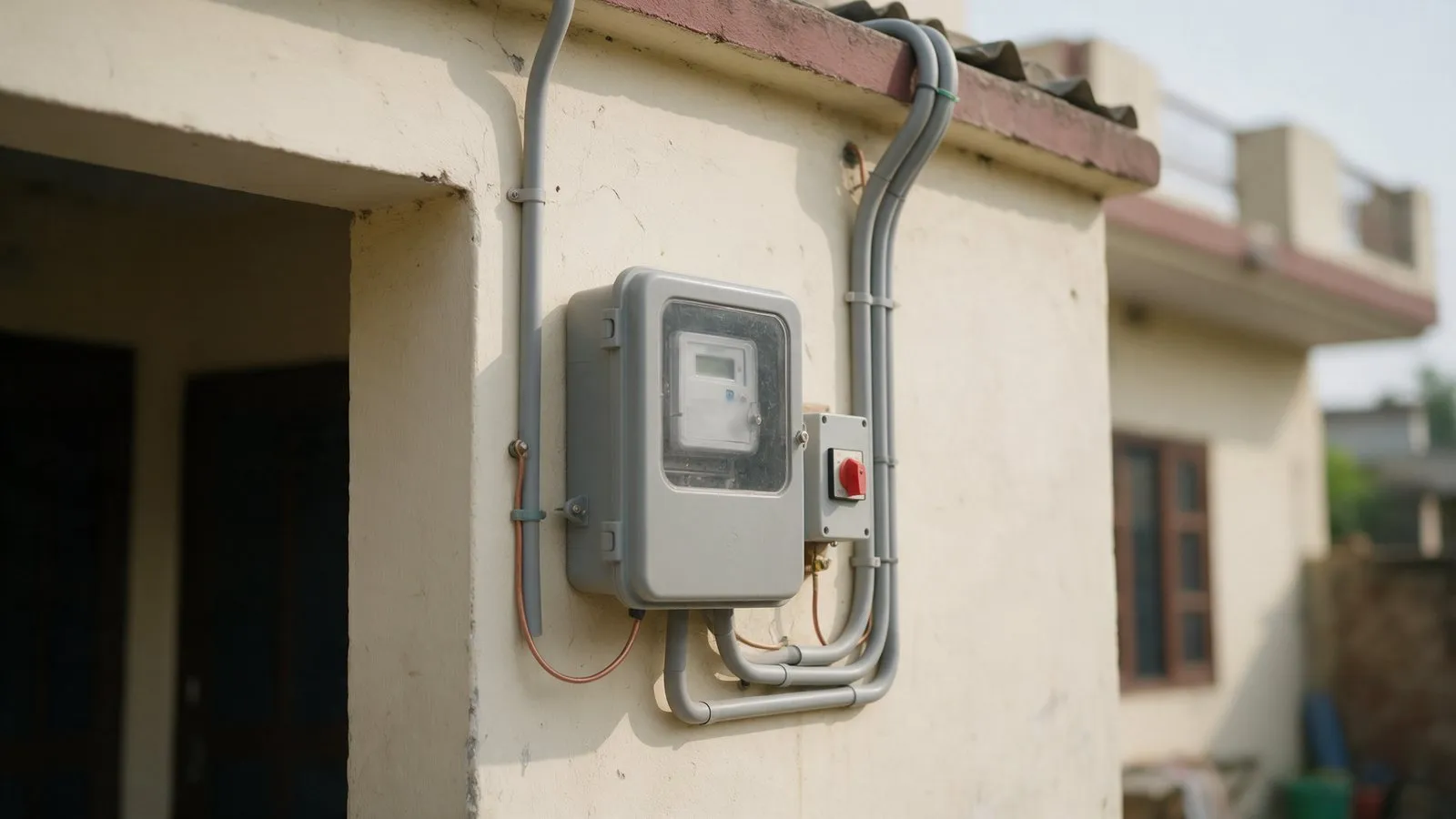 Representative image
Most delays in getting a net meter in Punjab come from paperwork, not from the roof. A name that does not match, a missing photograph or a system larger than the sanctioned load can hold a finished installation for weeks. This guide lists every document PSPCL asks for, grouped by stage and by who provides it, so the file is complete the first time.
The list follows PSPCL’s published procedure for rooftop solar under the Punjab State Electricity Regulatory Commission’s 2021 rooftop solar regulations, with the changes made since. If your own approval letter asks for something different, follow the letter.
Check three things on your bill first
Before any form is filled, look at your latest PSPCL bill:
If any of these needs changing, it is the first job, before the solar application.
What you provide when applying
| Document | Why it is needed | Who needs it |
|---|---|---|
| Latest PSPCL electricity bill | Account number, sanctioned load and category | Everyone |
| Identity proof and a photograph of the applicant | Uploaded on the portal and checked at inspection | Everyone (Aadhaar for subsidy homes) |
| Mobile number linked to Aadhaar | One-time passwords on the national portal | Subsidy homes |
| Proof of ownership, such as the sale deed or a property tax receipt | Shows you have the right to use the roof | Keep it ready |
| Roof type and shade-free area | Asked for on the application | Everyone |
| Owner’s or society’s no-objection letter | Permission to use a roof you do not own outright | Tenants, shared roofs and flats |
Homes claiming the subsidy apply on the national portal, pmsuryaghar.gov.in, which passes the application to PSPCL. Our step-by-step subsidy guide covers the portal screens.
Fees. PSERC has waived the application fee and meter-testing charges for home systems of up to 10 kW. Other applicants pay a processing fee of ₹50 a kW, with a minimum of ₹500 and a maximum of ₹10,000. The cost of the meter itself is paid by the consumer in either case, whether PSPCL supplies it or an approved meter is bought and handed to PSPCL for testing.
What your installer uploads after installation
Once the system is installed, the installer uploads these on the portal. PSPCL inspects only after the full set is in.
The installer also prepares a single-line diagram of the synchronising and protection arrangement, showing how the inverter, switches and earthing connect to PSPCL’s supply. It is handed to the PSPCL official at the inspection.
Ask your installer for a copy of everything they upload. These documents are your record of what was fitted, and you will need them for any warranty claim.
At the inspection and meter installation
PSPCL’s official checks the uploaded documents against the system on your roof. Keep the originals in one folder, because the procedure asks for hard copies of the uploaded documents at the inspection.
PSPCL then installs and seals the bi-directional net meter. Under PSERC’s regulations a separate generation meter, which records what the panels produce, is also fitted. Meters are jointly inspected and sealed in the consumer’s presence, so someone should be at home on the day.
The agreement. Until 2026, the net-metering agreement was a paper document signed at this stage. In August 2026, PSERC’s order on Petition 57 of 2026 allowed applicants who apply through the online portal to complete the agreement on the portal instead, and the system-generated agreement now counts as the connection agreement. PSPCL and the installer then sign a joint commissioning report, and billing on the net meter starts from the next cycle. How that bill works is explained in our guide to net metering in Punjab.
After commissioning: the subsidy
For a home claiming the subsidy, the last step is your bank details: a cancelled cheque or a copy of the passbook for an account in the applicant’s own name. The subsidy of up to ₹78,000 is paid into that account. A bank account in a different name is one of the most common reasons for a payment to stall.
The time limits at each stage
| Stage | Time limit |
|---|---|
| Feasibility approval, systems up to 10 kW | None. A complete application is treated as accepted |
| Feasibility approval, systems above 10 kW | 15 days |
| Correcting a deficiency PSPCL points out | 15 days, or the application is cancelled |
| Installing the system | 180 days from approval. One extension of up to 2 months, for ₹25 a kW (₹250 to ₹5,000), applied for at least 15 days before the deadline |
| Agreement, meter and commissioning | 15 days from the installation certificate |
The 15-day limits and the deemed approval for systems up to 10 kW come from PSERC’s regulations, amended in February 2025. Under the same amendment, if a system of up to 10 kW needs a higher sanctioned load, PSPCL carries out the increase, and you pay the load-extension charges. These are the limits on paper. The inspection and meter visit still depend on PSPCL’s schedule in your subdivision, and they remain the slowest part of most applications.
Cases that need extra documents
The connection is in a parent’s or previous owner’s name. Transfer it into your name first. PSPCL asks for proof that the property is now yours, and for an inherited house, the papers that show the succession.
The sanctioned load is too low. For homes up to 10 kW, the increase should be handled with the solar application. Above 10 kW, and for non-domestic connections, the load increase is a separate application that comes first. We check whether any load charges apply at the survey.
Flats and housing societies. A flat owner needs the society’s approval to use the common roof. Since 1 July 2026, PSERC’s virtual net metering lets residents set up one shared plant and divide the credits, which needs the society’s agreement and each member’s PSPCL account details.
Shops, clinics and offices. No subsidy applies, so there is no DCR certificate or bank step. The invoice should be in the business’s name, which also matters for claiming depreciation. Our guide to solar for shops and clinics in Zirakpur covers the savings side.
Chandigarh and Panchkula. Homes in Chandigarh apply to CPDL and homes in Panchkula to UHBVN. The documents are much the same, but the portals, forms and settlement rules are their own, so this list applies to PSPCL only.
What holds up a file
Our quotation checklist includes the paperwork questions to ask an installer before you sign.
How Maya Green Power helps
For homes and businesses in Mohali, Zirakpur, Kharar and New Chandigarh, we check the name, sanctioned load and category on your bill before anything is filed. We prepare the application, upload the installation documents, bring the single-line diagram and originals to the inspection, and follow up with PSPCL until the net meter is installed. Subsidy systems are installed through a registered vendor, named in your proposal.
Common questions
Do I need to visit the PSPCL office for net metering?
Usually not. Applications, uploads and approvals are handled online, and PSPCL's procedure verifies your identity at the inspection of the system rather than at the office. Someone should be at home for the inspection and the meter installation.
Is there a fee for net metering on a home in Punjab?
PSERC has waived the application fee and meter-testing charges for home systems of up to 10 kW. You still pay for the meter itself, and an extension fee applies if the system is not installed within 180 days of approval.
Do I still have to sign a net-metering agreement?
Yes, but since August 2026 applicants who apply through the online portal can complete it on the portal. PSERC allowed the system-generated agreement to count as the connection agreement, replacing the separate paper agreement signed at inspection.
Can I apply if the electricity connection is in my father's name?
Not as it stands. Transfer the connection into your name first. For a subsidy home, the name on the bill, Aadhaar and bank account should then match, or the payment can be held up.
Our home systems
Each one is sized to your own bills. See the price per kW and what each kW makes.
Core
Small home
Usually 1 to 3 kW
Ask about CoreComfort
Family home
Usually 4 to 5 kW
Ask about ComfortGrand
Kothi or large home
Usually 6 kW and above
Ask about Grand