
Home / Blog / Subsidy and net metering
PM Surya Ghar ends in March 2027: what it means for your solar plans
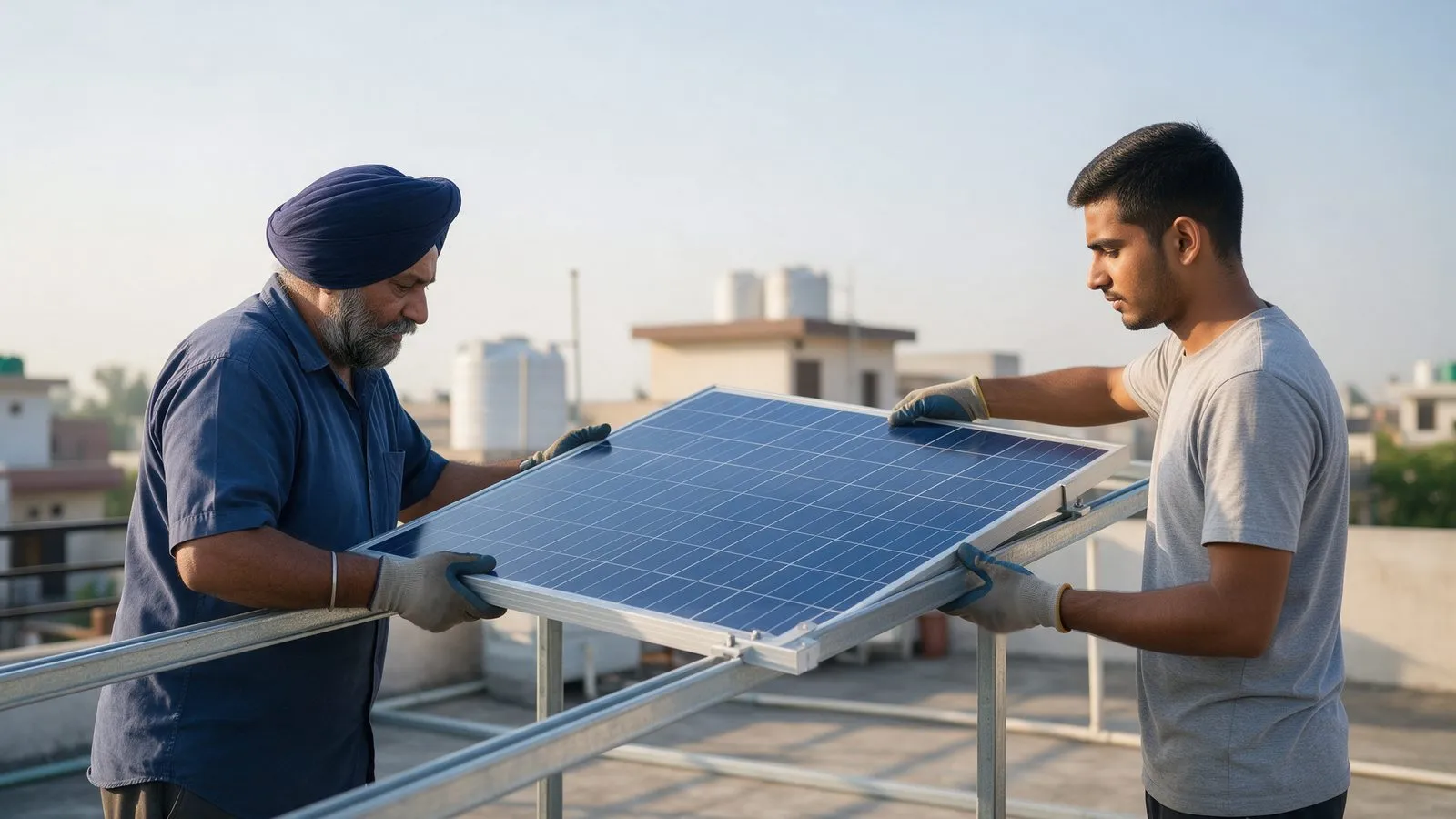 Representative image
The PM Surya Ghar Muft Bijli Yojana, which pays up to ₹78,000 towards a home rooftop solar system, is set to run until 31 March 2027. As of October 2026, the government has not announced whether it will be extended, renamed or changed after that date. If you have been thinking about solar for your home, this is the point to plan, not to panic. This guide sets out what is known, what is not, and how much time the process really needs.
What is known
What is not known
So the safe assumption is simple: aim to have your system installed, inspected and your subsidy claimed well before 31 March 2027.
How long the process takes
The roof work is quick. The paperwork is not. In Punjab, the steps are:
| Step | Typical time |
|---|---|
| Site survey and written proposal | 1 to 2 weeks |
| Portal application and PSPCL feasibility approval | a few weeks |
| Material delivery and installation | 1 to 3 weeks |
| PSPCL inspection and net meter | often the longest step, several weeks |
| Commissioning on the portal and subsidy payment | a few weeks |
Altogether, three to four months from first enquiry to subsidy in your bank account is a realistic plan, and some cases take longer. Our step-by-step subsidy guide explains each stage.
Why waiting until early 2027 is risky
A sensible timeline
| When | What to do |
|---|---|
| October to December 2026 | Get your bills together, have a site survey, compare quotes and apply on the portal |
| December 2026 to January 2027 | Feasibility approval and installation |
| February to March 2027 | Inspection, net meter, commissioning and the subsidy claim |
Starting by the end of 2026 leaves a comfortable margin for delays.
Should you rush into it?
No. A rushed decision is how people end up with the wrong system or an unreliable installer. The deadline is a reason to start the process now, not to skip the steps:
What if the scheme ends without the subsidy?
Solar would still pay for itself, just more slowly. For a typical home, the ₹78,000 subsidy shortens the payback by roughly two years. Without it, a correctly sized system still saves money for 25 years. You would also be free to choose non-DCR panels, which cost less. So the deadline matters, but missing it does not make solar a bad idea.
When the subsidy is worth taking
The subsidy is paid only on systems built with DCR panels, made with Indian solar cells, which cost about ₹9,000 more for every kW installed. The subsidy stops at ₹78,000 on 3 kW, but the extra panel cost keeps growing with size.
| System size | Extra cost of DCR panels | Subsidy | Cheaper route |
|---|---|---|---|
| 3 kW | ₹27,000 | ₹78,000 | DCR with the subsidy, about ₹51,000 better |
| 5 kW | ₹45,000 | ₹78,000 | DCR with the subsidy, about ₹33,000 better |
| 8 kW | ₹72,000 | ₹78,000 | About the same (DCR ₹6,000 better) |
| 10 kW | ₹90,000 | ₹78,000 | Non-DCR without the subsidy, about ₹12,000 better |
Up to about 8 kW, take the subsidy. From about 9 kW, non-DCR panels without it cost less, an option homes have until 31 March 2027. More on the subsidy page.
How we can help
For homes in Mohali, Zirakpur, Kharar and New Chandigarh, we check your eligibility and sanctioned load before anything is filed, prepare the application and follow it up with PSPCL through the inspection and net meter. Subsidy systems are installed through a registered vendor named on your application. Send a photograph of your bill on WhatsApp to find out whether the timeline works for your home.
Common questions
When does the PM Surya Ghar scheme end?
The current subsidy rates are set until 31 March 2027. As of October 2026, no extension has been announced, so plan on that date.
Will PM Surya Ghar be extended after March 2027?
No decision has been announced. Government schemes are sometimes extended or replaced, but it is not safe to plan on it. Aim to finish well before the deadline.
If I apply before March 2027, will I definitely get the subsidy?
The rules for applications still in progress at the end date have not been published. The safest plan is to have the system installed, inspected and the subsidy claimed before 31 March 2027, which means starting by the end of 2026.
Is solar still worth it without the subsidy?
Yes, for most homes that cross the 300 free units in summer. Without the ₹78,000 subsidy the payback is roughly two years longer, but the system still saves money for its 25-year life.
Our home systems
Each one is sized to your own bills. See the price per kW and what each kW makes.
Core
Small home
Usually 1 to 3 kW
Ask about CoreComfort
Family home
Usually 4 to 5 kW
Ask about ComfortGrand
Kothi or large home
Usually 6 kW and above
Ask about Grand