
Home / Blog / Buying guide
How to compare solar quotations without being misled
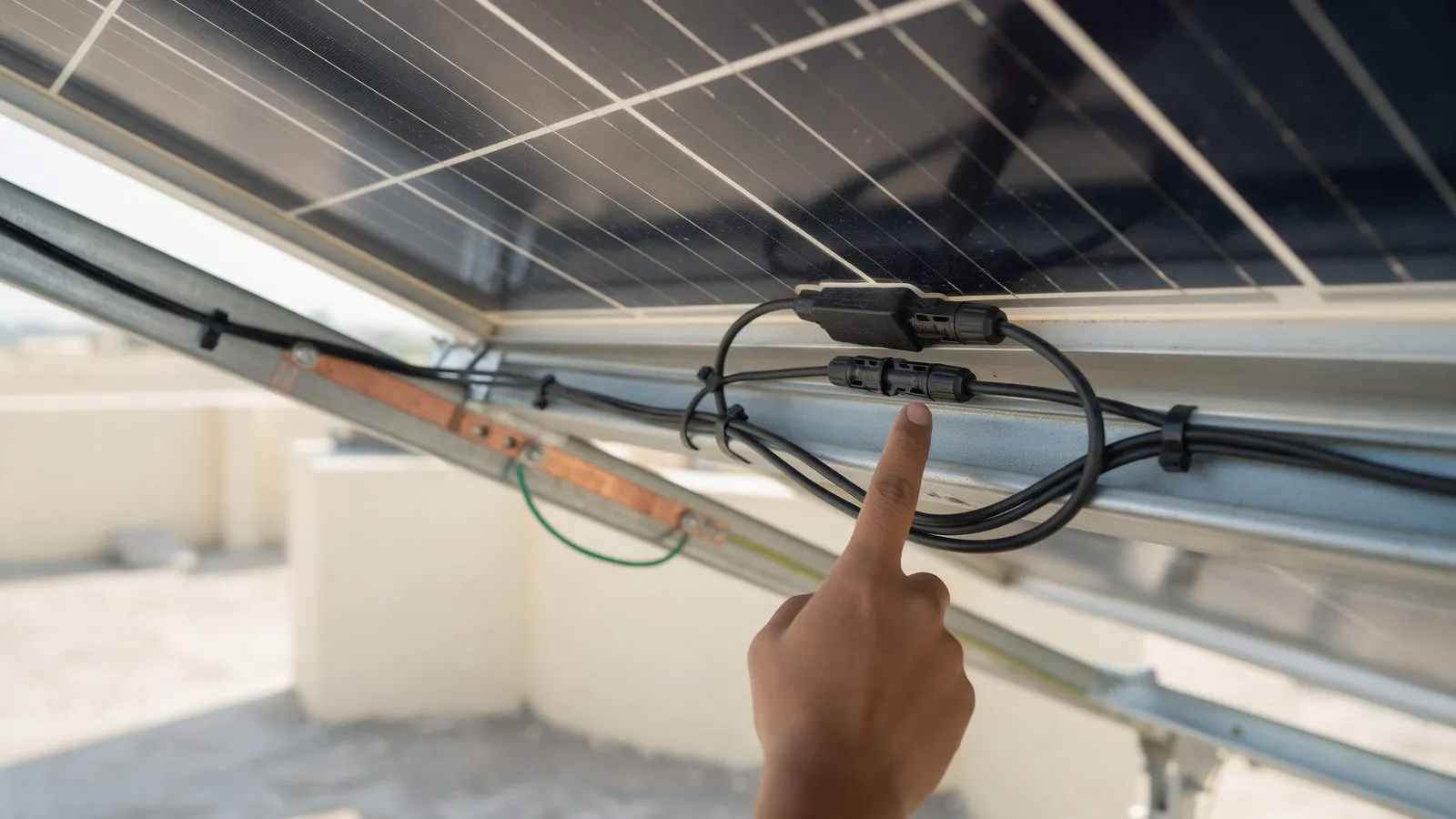 Representative image
When you collect quotes for rooftop solar, the cheapest one often looks like the obvious choice. But two quotes at the same price, or even for the same “5 kW”, can describe very different systems. One may use named, certified panels on a galvanised structure with proper earthing. The other may leave the panel make blank, undersize the inverter and charge extra for things the first one includes. This guide shows how to read a solar quotation line by line, so you compare like with like.
Our free one-page solar quotation checklist lists all 20 points to tick. This article explains why each one matters.
Start with the price per kW
Divide each quote’s total price by its system size in kW. For a home system with the Indian-made panels the subsidy requires, 2026 market prices run at roughly ₹52,000 to ₹66,000 per kW including GST. A quote far below that range usually saves money somewhere you cannot see: thinner cables, a lighter structure, unnamed panels or missing earthing.
Then check that “kW” means the same thing in each quote. System size should be the total panel capacity, in kWp (for example, 10 panels of 550 watts = 5.5 kWp), not the inverter rating.
The lines that matter
Panels: make, model and wattage
A proper quote names the manufacturer, the exact model and the wattage of each panel, and the number of panels. “540 Wp mono panels” with no brand is a red flag, because you cannot check the warranty or quality of a panel you cannot identify.
Check that the model is on the government’s ALMM list of approved panels on the MNRE website. For the PM Surya Ghar subsidy, the panels must also be DCR, made with Indian cells.
Inverter: make, model and size
The inverter should be named, with its BIS certification, and sized to match the panels. A 5 kWp array paired with a 3 kW inverter will throw away power on sunny days. An inverter priced far below others of the same size is often an unbranded unit with a short warranty.
Mounting structure
Ask for the material (hot-dip galvanised steel or aluminium), the height above the roof and how it is fixed. A structure that is too light or poorly anchored is a risk in Punjab’s summer storms. If you want to keep using the roof, the height must be in the quote, because “extra structure height” is a common add-on later.
Cables, earthing and protection
These are where cheap quotes save money:
Missing or undersized protection does not show on day one. It shows when something fails.
The GST line
Since 22 September 2025, GST on solar panels has been 5%, and a complete rooftop installation works out at roughly 8.9% overall. If a quote still applies 12% or more to the panels, ask why. Some installers use an old, higher base price, which also makes the subsidy look like a bigger discount than it is.
Generation and savings claims
In Tricity, a shade-free system makes about 110 to 125 units per kW each month averaged over the year. A quote promising much more, or a payback of two or three years for an ordinary home, is selling, not estimating. A good quote states its generation figure and the assumptions behind it.
Approvals, subsidy and timeline
The quote should say who files the net-metering application with your electricity board (PSPCL, CPDL or UHBVN), who pays the board’s fees and meter cost, and roughly how long each step takes. For the subsidy, it should name the registered vendor as it will appear on your PM Surya Ghar application.
Exclusions
Ask for exclusions in writing. Common extras that appear after you sign: civil work, structure height above a standard level, cable beyond a set length, meter charges and a load increase.
Warranties: three different things
A single line saying “25-year warranty” is not enough. Ask for the manufacturer’s warranty documents.
Payment terms
Pay in stages linked to delivery and commissioning. Never pay the full amount in advance, and avoid paying most of it before your electricity board has approved feasibility.
A worked comparison
Two quotes for a Mohali home, both described as “5 kW”:
| Quote A | Quote B | |
|---|---|---|
| Price incl. GST | ₹2.45 lakh | ₹2.95 lakh |
| Panels | “550 Wp mono”, no brand | Named ALMM, DCR model, 10 × 550 Wp |
| Inverter | 4 kW, brand not stated | Named 5 kW, BIS certified |
| Structure | “Standard” | Hot-dip galvanised, 2 m raised |
| Earthing | Not mentioned | 3 earth pits and lightning arrester |
| Net metering | “Assistance” | Filed by installer, fees included |
| Exclusions | Not listed | Listed in writing |
Quote A looks ₹50,000 cheaper. But its panels may not qualify for the ₹78,000 subsidy, its inverter is undersized, and earthing, structure height and net-metering fees could all be extra. Quote B is the one you can actually compare, check and hold to account.
Get a second opinion
Send any solar quotation, including one from another company, to us on WhatsApp. We check it against the 20 points and tell you what is missing, free of charge. You can also download the checklist and use it yourself.
Common questions
Why are two quotes for the same kW so different in price?
Because the components behind the "kW" differ: panel brand and certification, inverter size and brand, structure material and height, cable sizes, earthing and protection, and what is included in the price. Compare the line items, not the total.
How can I check if a solar panel is approved?
Ask for the exact make and model, then look it up on the ALMM list on the MNRE website. For the PM Surya Ghar subsidy, the panels must also be DCR, made with Indian cells.
How much advance should I pay for rooftop solar?
Pay in stages tied to delivery and commissioning, and avoid paying most of the amount before your electricity board has approved feasibility. Never pay the full price in advance.
Is the cheapest solar quote ever the right choice?
It can be, if every line matches a dearer quote. Usually the difference is hidden in unnamed panels, an undersized inverter, a lighter structure, thinner cables or missing earthing, which cost more over 25 years than they save at the start.
Our home systems
Each one is sized to your own bills. See the price per kW and what each kW makes.
Core
Small home
Usually 1 to 3 kW
Ask about CoreComfort
Family home
Usually 4 to 5 kW
Ask about ComfortGrand
Kothi or large home
Usually 6 kW and above
Ask about Grand