
Home / Blog / Battery backup
Lithium or tubular battery for solar: a 10-year cost comparison
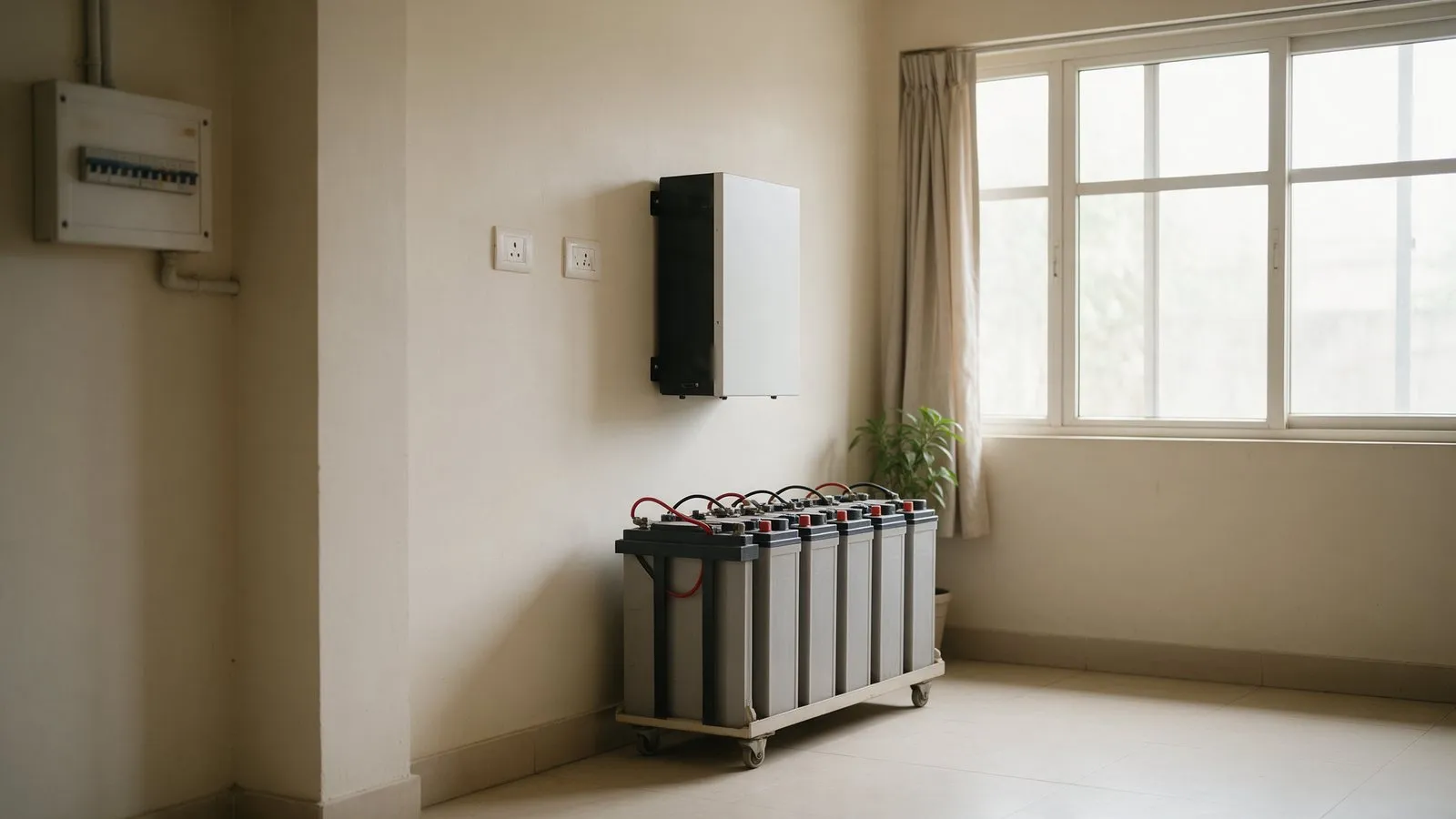 Representative image
Most homes in Tricity already know tubular batteries from their inverters. When they add solar with backup, the quotation usually offers lithium as well, at a much higher price. The price on the day is only part of the comparison: the two types differ in how much of their capacity you can use, how long they last and how much looking after they need. This guide compares them over ten years, and explains the two kinds of lithium you may be offered.
The main differences
| Lithium (LFP) | Tubular (lead-acid) | |
|---|---|---|
| Usable share of the rated capacity | About 80% to 90% | About 50%, for a reasonable life |
| Typical life in daily use | Often 10 years or more | Usually 4 to 6 years |
| Energy lost charging and discharging | Small, around 5% | Larger, often 15% to 20% |
| Maintenance | None | Distilled water top-up every few months |
| Space | Compact, often wall-mounted | Bulky, on the floor, needs ventilation |
| Price on the day | Higher | Lower |
The usable share matters most. A tubular battery drained deep every day wears out quickly, so in practice you plan to use about half its rated energy. A lithium battery can be used much deeper for thousands of cycles. That means a lithium battery of a given rated size does about the work of a tubular bank nearly twice its size.
A 10-year example
Take a home that wants about 4 units (kWh) of usable backup: enough, as a guide, for around 500 watts of lights, fans, the fridge and Wi-Fi for roughly eight hours.
Tubular. Four 150 Ah tubular batteries hold about 7.2 kWh in total, of which about 3.6 kWh is usable. At roughly ₹12,000 to ₹18,000 each, the bank costs about ₹50,000 to ₹70,000. With a life of four to six years, it is replaced at least once in ten years, so the ten-year cost is roughly ₹1 lakh to ₹1.4 lakh, less whatever the old batteries fetch in exchange.
Lithium. A 5 kWh LFP battery gives about 4 to 4.5 kWh of usable energy. Packaged home batteries in 2026 cost very roughly ₹15,000 to ₹30,000 per kWh, so about ₹75,000 to ₹1.5 lakh. With a life of ten years or more, it is bought once.
Over ten years the two cost about the same, and the lithium battery gives more usable energy, wastes less solar power, needs no maintenance and takes a fraction of the space. Battery prices vary widely by brand and change quickly, so compare actual quotations on this basis: cost over ten years for the usable energy you need.
When tubular still makes sense
When lithium is the better choice
LFP or NMC: the two kinds of lithium
Lithium batteries come in different chemistries. Two are common:
For a battery that sits in a house through Tricity summers and cycles every day, choose LFP. Ask the quotation to state the chemistry; “lithium-ion” alone does not tell you which.
Heat and placement
High temperatures shorten the life of every battery, and of lead-acid most of all. Place the battery in the coolest ventilated spot available, out of direct sun and away from the kitchen. Tubular batteries also give off gas when charging, so they need ventilation and must not sit in a closed cupboard.
What to check in a battery quotation
Common questions
Is a lithium battery worth it for home solar?
Usually, if the battery will be used every day. Over ten years a lithium (LFP) battery costs about the same as tubular batteries replaced once or twice, while giving more usable energy, wasting less solar power and needing no maintenance. For occasional power cuts, tubular can still be the cheaper choice.
How long does a lithium solar battery last?
A good LFP battery typically lasts ten years or more in daily use, and is usually warranted for a set number of years or cycles with a minimum remaining capacity. Tubular batteries usually last four to six years.
What is the difference between LFP and NMC batteries?
Both are lithium batteries. LFP is more stable in heat and lasts many more charge cycles, which makes it the standard for home storage. NMC packs more energy into less weight, which suits cars and phones, but lasts fewer cycles.
Can I use my existing tubular batteries with solar?
Often, yes. An on-grid solar system can work alongside your existing inverter and batteries, which continue to provide backup while the solar system reduces the bill. Connecting them to a hybrid solar inverter depends on the inverter and the condition of the batteries, which we check at the survey.
Our home systems
Each one is sized to your own bills. See the price per kW and what each kW makes.
Core
Small home
Usually 1 to 3 kW
Ask about CoreComfort
Family home
Usually 4 to 5 kW
Ask about ComfortGrand
Kothi or large home
Usually 6 kW and above
Ask about Grand