
Home / Blog / Battery backup
On-grid or hybrid solar: which one suits your power cuts?
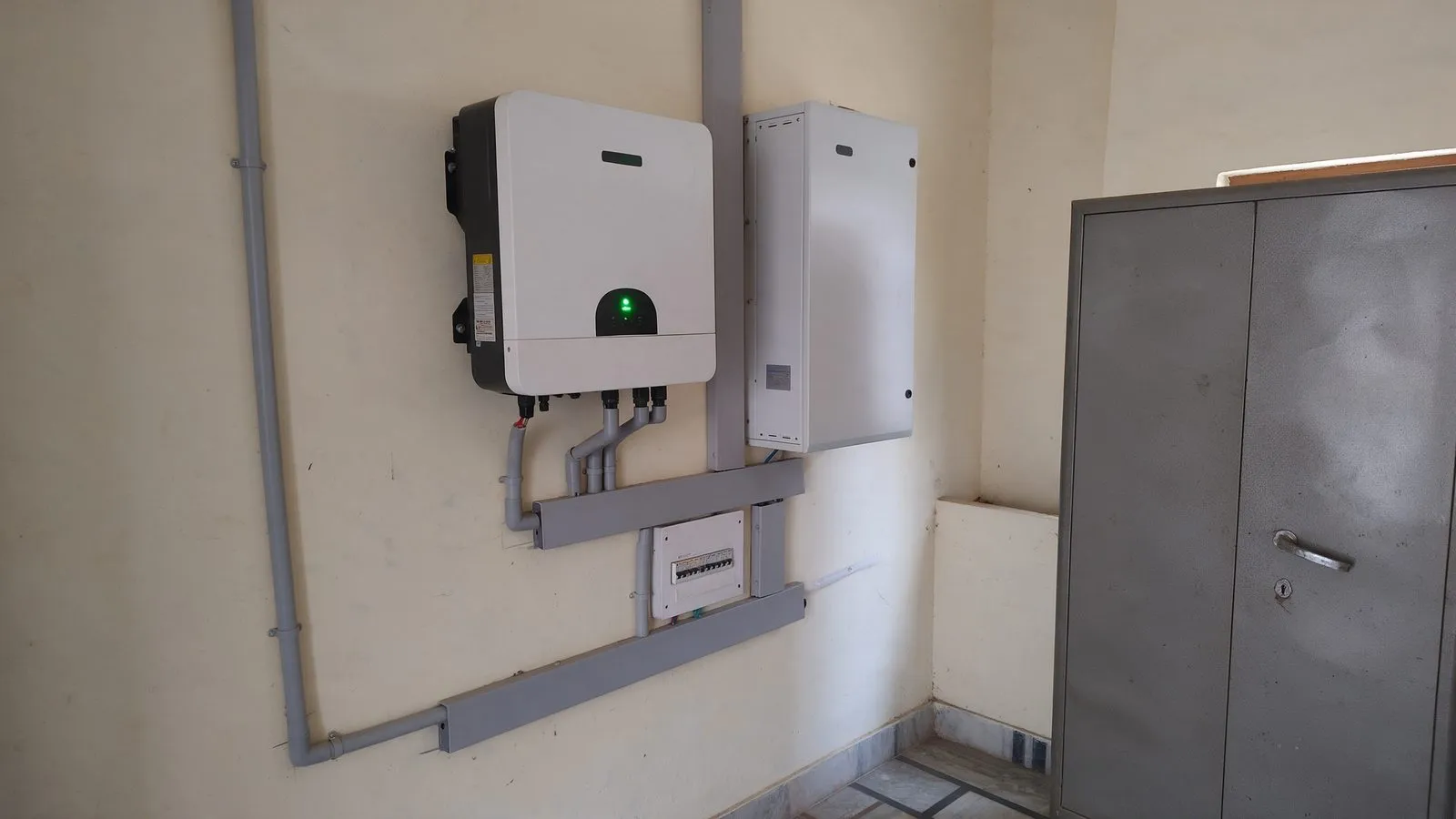 Representative image
Many people in Tricity assume rooftop solar will keep the lights on when the power goes. A standard on-grid system will not. If backup during power cuts matters to you, you need a hybrid system with a battery, or a plan that keeps your existing inverter. This guide explains the difference, what each costs in 2026, and how to choose.
Why on-grid solar switches off in a power cut
An on-grid system has no battery. Its inverter turns the panels’ power into electricity for your home and sends any surplus to the grid through the net meter.
When the grid fails, the inverter shuts down within a fraction of a second, even in bright sunshine. This is a mandatory safety feature called anti-islanding. Linemen repairing a fault assume the lines are dead. If rooftop systems kept feeding power into them, they could be electrocuted. So in a power cut, a plain on-grid system produces nothing for your home until the grid returns.
On-grid solar is built to cut your bill, not to give backup.
On-grid system
Running on solarSwitched off, even in full sun
Hybrid with battery
Running on solar, charging the batteryBackup on: solar runs the essentialsA cloud passes: the battery takes over
Grid on: both homes run on their own solar power.
Power cut: the on-grid system switches off at once, even in full sun, so that linemen working on the lines stay safe. The hybrid system keeps the lights, fans, fridge and Wi-Fi running from the panels and the battery.
What a hybrid system adds
A hybrid system has a hybrid inverter and a battery. When the grid fails, it disconnects your home from the grid safely and runs a dedicated backup circuit from the battery and the panels. In daylight, the panels keep supplying that circuit and recharge the battery, so a long daytime cut drains it far more slowly.
The backup circuit is normally wired for essential loads:
- Lights and fans
- The Wi-Fi router and CCTV
- The fridge, or a clinic’s medicine fridge
- A few chosen sockets, for a computer, a billing machine or phone charging
Air conditioners, geysers and water pumps are usually left off the backup circuit, because they would need a much larger battery and inverter.
When the grid is on, a hybrid system cuts your bill just like an on-grid one, with net metering.
What each costs in 2026
These are market ranges for planning, including GST, for a typical home:
| 5 kW on-grid | 5 kW hybrid with a 5 kWh lithium battery | |
|---|---|---|
| Price before subsidy | ₹2.6 lakh to ₹3.3 lakh | about ₹4.2 lakh to ₹5.6 lakh |
| Backup in a power cut | None | Essential loads, for hours |
| Battery replacement | Not applicable | Lithium usually lasts 10 years or more |
The difference comes from two things:
On the subsidy: PM Surya Ghar supports the solar part of a grid-connected home system. It does not pay for the battery. Whether a particular hybrid configuration qualifies depends on the scheme’s current rules, so we confirm it for each case before you commit. Read how the subsidy works.
How much battery do you need?
Work out the essential load in watts and the hours of backup you want:
Battery size (kWh) ≈ load in watts × hours of backup ÷ 1,000, plus about 20% margin.
As a guide, a 5 kWh lithium battery runs about 500 watts of lights, fans, a fridge and Wi-Fi for around eight hours. Most homes need less storage than they expect, because the battery only has to cover the essential circuit, not the whole house.
Which one should you choose?
Choose on-grid, and keep your existing inverter, if:
- Power cuts in your area are occasional and short.
- Your existing inverter and battery already cope.
This is the most economical option. The solar system cuts your bill, and the existing inverter continues to provide backup as it does today.
Choose hybrid if:
- Cuts in your area have become frequent or long.
- Your existing inverter battery is due for replacement anyway.
- Something must stay on: a clinic fridge, a home office, CCTV or a shop’s billing system.
- You run a diesel generator during cuts and want to run it less.
Not sure yet? A hybrid inverter can be fitted now and the battery added later. A standard on-grid inverter cannot take a battery, so raise backup at the design stage, not after installation.
What about off-grid solar?
An off-grid system has no connection to the electricity board at all. Everything the house uses comes from the panels and the battery, so both must be sized for the worst days: a week of monsoon cloud or winter fog, not an average day. That means a much larger battery bank and more panels, and when the battery is full on a sunny afternoon, the surplus is simply wasted, because there is no grid to export it to. Off-grid systems also get no net metering and no PM Surya Ghar subsidy, which is only for grid-connected homes.
Off-grid makes sense where there is no reliable grid supply to connect to, such as a farmhouse or a tube well far from the lines. For a home in Mohali, Zirakpur or Chandigarh with a PSPCL, CPDL or UHBVN connection, a hybrid system gives most of the independence of off-grid, keeps the grid as a backstop, and costs far less.
Lithium or tubular battery?
| Lithium (LFP) | Tubular (lead-acid) | |
|---|---|---|
| Upfront cost | Higher | Lower |
| Typical life | Often 10 years or more | Usually 4 to 6 years |
| Maintenance | None | Distilled water top-up every few months |
| Space | Compact, often wall-mounted | Bulky, needs ventilation |
| Suits | Daily use and frequent cuts | Occasional cuts, tighter budget |
Over ten years the gap narrows, because a tubular bank usually needs replacing at least once. Your proposal should show both, with brands, warranties and expected life.
For details of how we size and install backup systems, see solar with battery backup.
Common questions
Will my on-grid solar work during a power cut?
No. It switches off within a fraction of a second when the grid fails, to protect linemen working on the lines, and stays off until the grid returns. For backup you need a hybrid system with a battery, or your existing inverter.
Can I use my existing home inverter with on-grid solar?
Yes. The two work side by side: solar cuts the bill, and the existing inverter keeps providing backup during cuts. It is often the most economical arrangement.
Can a hybrid solar system run my AC during a power cut?
It can, but only with a much larger battery and inverter, which raises the cost considerably. For most homes it is better value to keep air conditioners off the backup circuit. Where one AC is essential, ask for prices with and without it.
Is the battery covered by the PM Surya Ghar subsidy?
No. The subsidy supports the solar part of a grid-connected home system and does not pay for batteries. Eligibility of a hybrid configuration depends on the scheme's current rules, which should be confirmed before you commit.
Should a home in Tricity go off-grid with solar?
Rarely. An off-grid system needs a much larger battery and more panels to get through cloudy and foggy spells, wastes its surplus when the battery is full, and gets no net metering or subsidy. Where there is a grid connection, a hybrid system gives backup in power cuts at a far lower cost.
Our home systems
Each one is sized to your own bills. See the price per kW and what each kW makes.
Core
Small home
Usually 1 to 3 kW
Ask about CoreComfort
Family home
Usually 4 to 5 kW
Ask about ComfortGrand
Kothi or large home
Usually 6 kW and above
Ask about Grand