
Home / Blog / Battery backup
Can I connect rooftop solar to my existing home inverter?
 Representative image
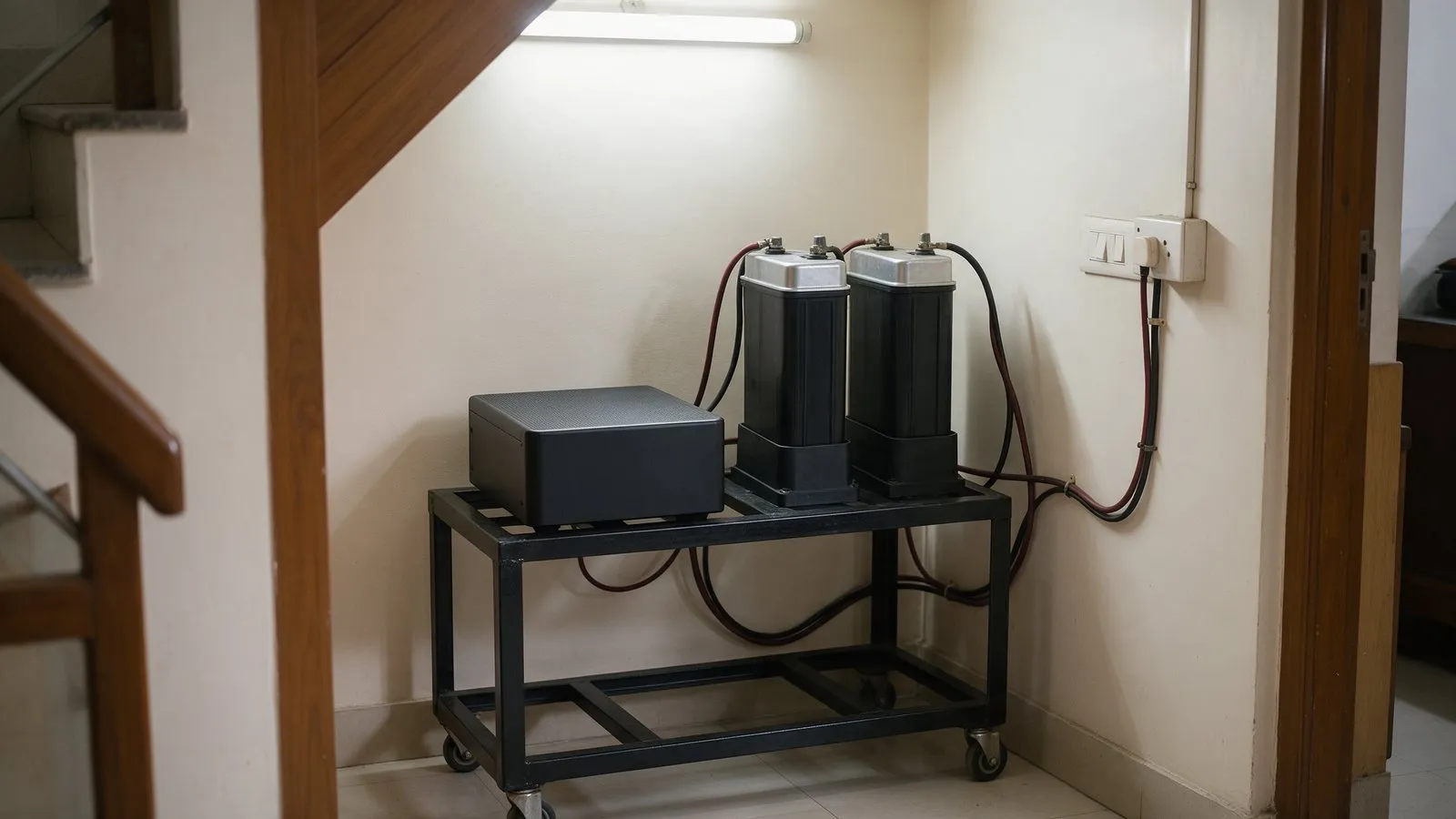
Most homes in Tricity already have a power-cut inverter: a box under the stairs with one or two tall tubular batteries, keeping the fans and lights on when the supply goes. So a common question when people consider solar is whether the panels can simply be connected to it. Sometimes they can, but the right answer depends on what you want solar to do: cut the bill, keep the backup, or both.
Why an ordinary solar system stops in a power cut
A standard rooftop system is on-grid. Its inverter converts the panels’ power and feeds it into your home and the grid. MNRE’s technical specification for rooftop systems requires islanding protection, which means the solar inverter must switch off when the grid fails, so it cannot send power down lines that a lineman may be working on. So in a power cut, an on-grid system makes nothing, however sunny it is.
Your existing home inverter works the other way. It charges its batteries from the grid and takes over the backed-up circuits when the grid fails. The two systems do different jobs, which is why the choice below matters.
On-grid system
Running on solarSwitched off, even in full sun
Hybrid with battery
Running on solar, charging the batteryBackup on: solar runs the essentialsA cloud passes: the battery takes over
Grid on: both homes run on their own solar power.
Power cut: the on-grid system switches off at once, even in full sun, so that linemen working on the lines stay safe. The hybrid system keeps the lights, fans, fridge and Wi-Fi running from the panels and the battery.
Three ways to combine them
1. Keep both, side by side
Install an on-grid solar system, connected at your main supply, and keep the existing inverter and batteries exactly as they are.
This is the cheapest way to get both a lower bill and backup, because nothing you own is wasted. Its limit is that the panels do not help during a cut, so long cuts on sunny days still drain the batteries.
2. Replace the home inverter with a hybrid inverter
A hybrid inverter does both jobs in one box. It feeds the grid when the supply is on, charges a battery from the panels, and keeps the backed-up circuits running from the panels and the battery when the supply fails.
This suits homes with long or frequent cuts. Our guide to on-grid or hybrid solar compares the two in more detail.
3. Add a solar charger to the home inverter
Some home inverters can take a solar charge controller, or come in a “solar” version, so that a few panels charge the batteries directly.
This can make sense for a small backup-only setup, but it does little for a large summer bill.
Which one to choose
| What matters most | Best fit |
|---|---|
| A lower bill, with the backup you have today | Option 1: on-grid solar, keep the home inverter |
| A lower bill, and backup that lasts through long daytime cuts | Option 2: a hybrid inverter |
| Backup only, on a small budget | Option 3: a solar charger on the home inverter |
Things to check before you decide
How we approach it
At the survey we look at the existing inverter, the batteries and the backed-up circuits, and ask how long and how often your cuts last. The proposal then shows the option that fits, with the price of each part, and says plainly if your existing equipment can be kept. Our battery backup page covers hybrid systems.
Common questions
Can I connect solar panels directly to my home inverter?
Only if the inverter is made to take a solar charge controller, and then the panels only charge its batteries, with no net metering or subsidy. For a lower bill, install an on-grid system alongside the home inverter, or replace it with a hybrid inverter.
Will my on-grid solar system work during a power cut?
No. MNRE's specification requires islanding protection, so an on-grid inverter switches off when the grid fails. Your existing home inverter can still cover the backed-up circuits from its batteries, as it does now.
Can a hybrid solar inverter use my old tubular batteries?
Some can, if the battery voltage matches the inverter and the batteries are in good health. Daily solar cycling wears a tubular bank faster than occasional backup, so an ageing bank is usually better replaced when you switch to a hybrid system.
Do I get the PM Surya Ghar subsidy if I keep my home inverter?
Yes, if the solar system itself is grid-connected, uses DCR panels and meets the scheme's other conditions. Keeping a separate home inverter for backup does not affect it. A solar charger added to the home inverter does not qualify.
Our home systems
Each one is sized to your own bills. See the price per kW and what each kW makes.
Core
Small home
Usually 1 to 3 kW
Ask about CoreComfort
Family home
Usually 4 to 5 kW
Ask about ComfortGrand
Kothi or large home
Usually 6 kW and above
Ask about Grand