
Home / Blog / Buying guide
Solar warranties explained: panels, inverter and workmanship
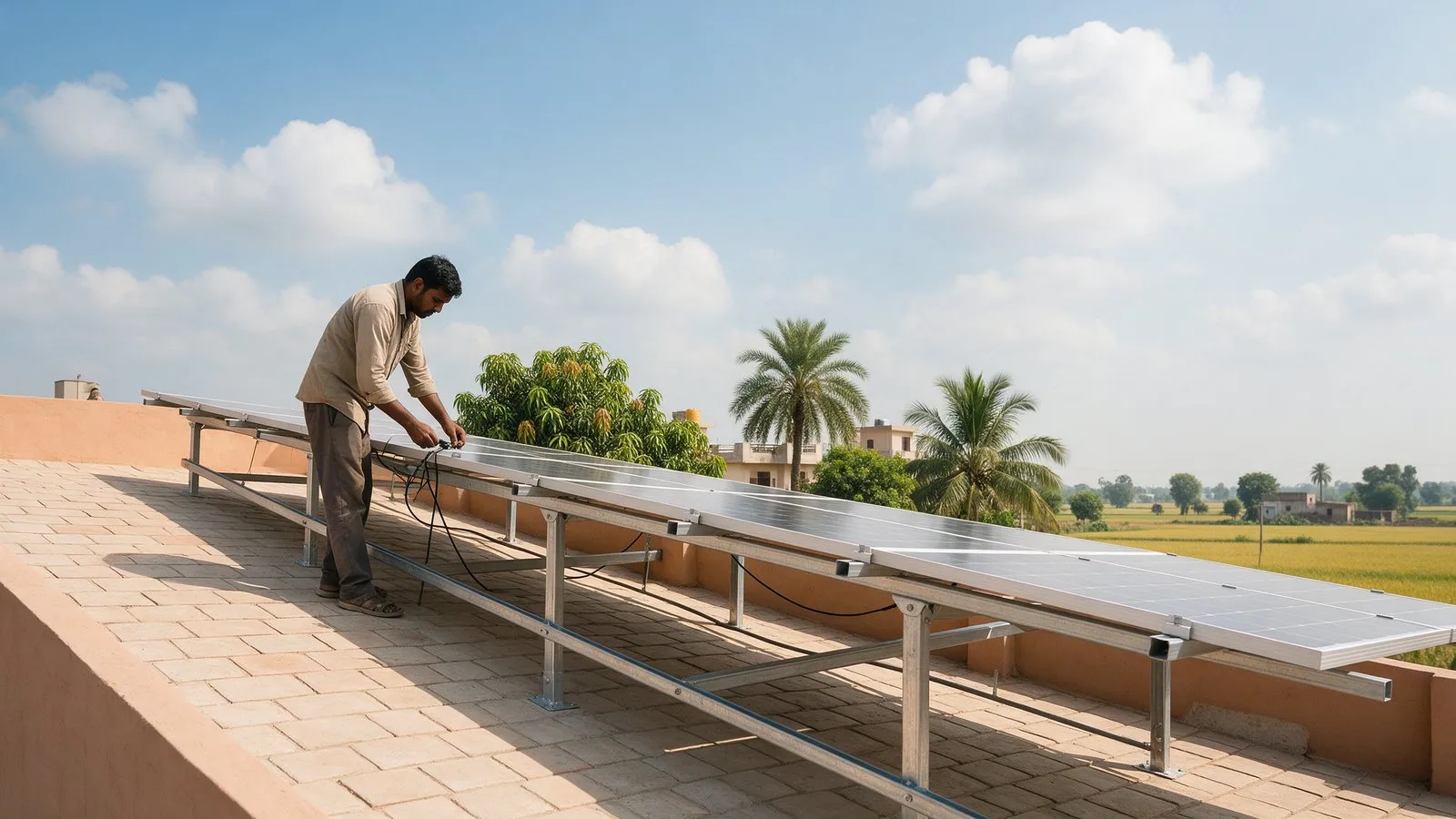 Representative image
“25-year warranty” is the line most solar quotations lead with, and it is the line most often misunderstood. A rooftop system is covered by several warranties from different companies, for different parts and different lengths of time, and the 25 years usually applies to only one of them. This guide sets out each warranty, what it covers, what none of them cover, and how to make a claim.
The warranties behind one system
| Warranty, and who gives it | What it covers | Typical length |
|---|---|---|
| Panel product, from the panel maker | Defects in the panel itself: the glass, frame, junction box and cells | 10 to 15 years |
| Panel performance, from the panel maker | Output stays above a stated level as the panel ages | 25 to 30 years |
| Inverter, from the inverter maker | Failure of the inverter | 5 to 10 years, sometimes extendable |
| Battery, from the battery maker (hybrid systems) | Failure, and capacity falling below a stated level | A set number of years or charge cycles |
| Workmanship, from the installer | The fixings, wiring, connections and waterproofing at the anchors | Varies by installer |
| System warranty, from the registered vendor (subsidy homes) | The whole system | 5 years from commissioning |
So when a quotation says “25-year warranty”, it almost always means the panel performance warranty. The inverter, the part most likely to need attention, is covered for far less.
Product and performance: the two panel warranties
The product warranty covers the panel as an object: cracked glass from a manufacturing fault, a failed junction box, peeling layers or a faulty frame. It is the one more likely to be used, and it typically runs 10 to 15 years.
The performance warranty promises that output will not fall below a stated level. A typical datasheet promises at least 98% of rated output in the first year, then a fall of no more than about 0.4% to 0.55% a year, to around 85% to 89% after 25 or 30 years. Our guide to panel types shows how these figures differ between PERC and TOPCon.
A performance claim needs evidence that a panel is producing less than the warranty promises, usually from a test by the manufacturer or an approved laboratory. The monitoring app is what tells you something is wrong in the first place, so check it regularly.
The inverter warranty
The inverter works hardest of any part, and it is the part most likely to fail within the life of the system. Before you sign, ask:
Batteries
Lithium batteries are usually covered for a number of years or charge cycles, whichever comes first, with a promise that capacity stays above a stated level, often around 70%. Tubular batteries are usually covered for a few years, sometimes partly on a pro-rata basis. Our battery backup page compares the two.
The installer’s workmanship warranty
The manufacturers cover their products. The installer covers the installation: a leak where an anchor goes into the roof, a loose connection, a cable rubbing on a sharp edge, a structure bolt working loose. Ask for the workmanship warranty in writing, with its length and how quickly a complaint will be answered.
The five-year system warranty for subsidy homes
For homes under PM Surya Ghar, the scheme’s rules require the registered vendor to give a warranty covering the whole system for five years from commissioning, and to repair faults free of charge in that period. In October 2026 MNRE also required the manufacturers’ warranty documents to carry the serial numbers of the panels and inverter actually installed. At handover, check the serial numbers on the warranty cards against the ones on the equipment.
What no warranty covers
- Damage from storms, lightning, fire or flooding
- Theft, and damage by monkeys or birds
- Damage from work by anyone else on the roof or the wiring
- Damage from cleaning with abrasive tools or high-pressure jets
- Changes to the system made without the installer
Most of these are insurance matters. Ask your home insurer whether the solar system can be added to your policy.
How to make a claim
- Keep the paperwork together: the invoice, the serial numbers, the warranty cards and the installation photographs.
- Register the warranty with the manufacturer if it asks you to. Some manufacturers require online registration after installation.
- Keep the monitoring app connected, so you have a record of output from the first day.
- Report a fault to the installer first. They should find which part has failed and take the claim to the right manufacturer.
How Maya Green Power handles warranties
Every proposal from us lists the warranty for each part, and the warranty cards and serial numbers come with the handover documents. Our customers report a fault to us. Our own installation team fixes any workmanship problem, and we take product claims to the manufacturer on the customer’s behalf. Every home system also includes the 4-Year Care Shield, with seasonal visits that catch problems early.
Common questions
Does a 25-year solar warranty cover the whole system?
No. It usually refers to the panel performance warranty only. The panel product warranty typically runs 10 to 15 years, the inverter 5 to 10 years, and the installation whatever the installer offers. For subsidy homes, the registered vendor must also give a five-year warranty on the whole system.
What is the difference between a product and a performance warranty?
The product warranty covers defects in the panel itself, such as a failed junction box or peeling layers. The performance warranty promises that output will not fall below a stated level as the panel ages, typically around 85% to 89% after 25 or 30 years.
How long do rooftop solar panels last?
Good panels keep producing for 25 to 30 years and often longer, gradually losing a little output each year. The inverter usually needs repair or replacement at least once in that time, which is why its warranty and local service matter.
Are storm and lightning damage covered by the solar warranty?
No. Manufacturer and installer warranties cover defects and workmanship, not storms, lightning, fire, theft or animal damage. Ask your home insurer about adding the solar system to your policy.
Our home systems
Each one is sized to your own bills. See the price per kW and what each kW makes.
Core
Small home
Usually 1 to 3 kW
Ask about CoreComfort
Family home
Usually 4 to 5 kW
Ask about ComfortGrand
Kothi or large home
Usually 6 kW and above
Ask about Grand